
Synthesis of Hexachlorocyclotriphosphazene
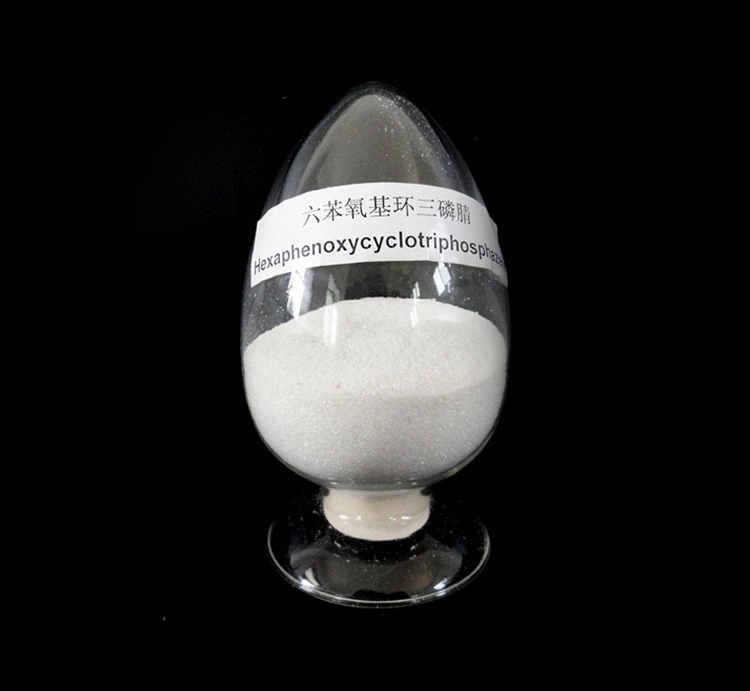
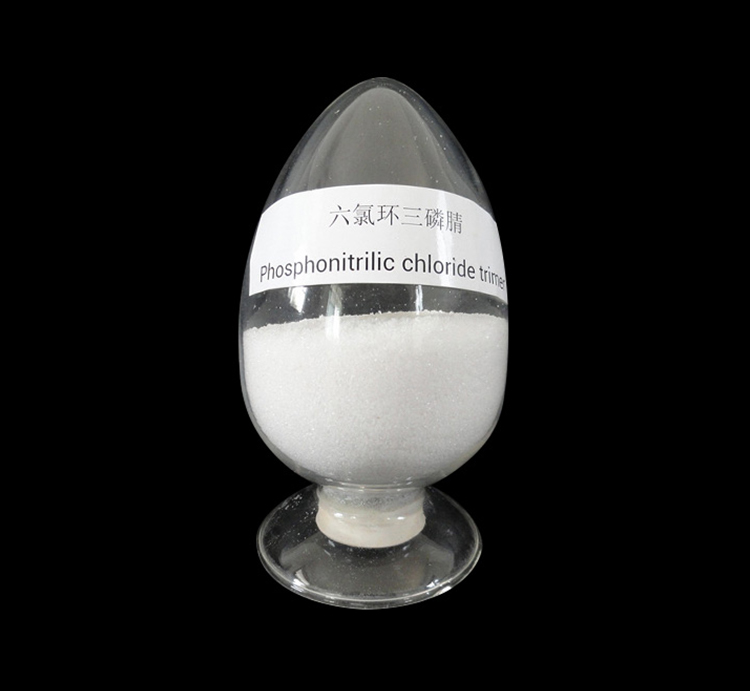
2. Replace NH4C1 with NH3 and HCl or PCl3 and Cl2 with PCL5. Since NH4C1 is insoluble in inert organic solvents and PCL5 has small solubility in general inert organic solvents, PCL5 is easy to sublimate if the temperature is increased, so it is difficult to find an inert organic solvent suitable for both PCL5 and NH4C1. It was proposed to replace NH4C1 with NH3 and HCl, or PCl3 and Cl2 with PCL5. The yield of this method is higher than that obtained by directly using PCL5 and NH4C1 as raw materials.
3, organic amine or n (SiMe3) 3 instead of NH4Cl, ammonium carbamate (nh2coonh4) instead of NH4Cl, and react with PCL5 in inert organic solvent. This method has short reaction time and high product yield. However, due to the high price of nh2coonh4, the production cost is increased and the practical value is not high. Allcock et al. Used n (SiMe3) 3 instead of NH4Cl to react with PCL5 in dichloromethane solvent at 40 ℃, and the yield of Hexachlorocyclotriphosphazene was 76%. It is reported that the reaction is cation initiated polymerization.
4. Selecting appropriate catalysts and using catalysts can shorten the reaction time. The traditional catalysts are metal chlorides, metal sulfides, metal oxides and metal organics. The combination of traditional catalyst and pyridine or its derivatives can achieve very good results and greatly improve the yield of Hexachlorocyclotriphosphazene. The process uses PCL5 and NH4Cl raw materials, traditional inert solvent and metal catalyst, drops a certain amount of pyridine or its derivatives, heats and refluxes at 120 ℃ - 150 ℃, reacts for about 1 hour when the generated gas stops releasing, and the content of Hexachlorocyclotriphosphazene in the product is at least 90%.
5. Separation method the traditional separation method generally first filters out the unreacted NH4Cl, then distills under reduced pressure to recover the solvent, and then washes, crystallizes and recrystallizes with petroleum ether to obtain Hexachlorocyclotriphosphazene crystal. Others use 98.7% sulfuric acid to separate the solubility of Hexachlorocyclotriphosphazene; Some use bronster (BR φ Nsted) alkali treatment separation. The phosphonitrile mixture is separated and purified by vacuum distillation. Firstly, the solvent is evaporated under vacuum, and the solid obtained after cooling is dissolved in liquid paraffin. The fractions under different pressures and temperatures are collected by vacuum distillation, and the solid products are filtered and washed. Finally, Hexachlorocyclotriphosphazene and octachlorocyclotetraphosphazene with purity of 99.99% can be obtained by vacuum drying. Using the characteristics of easy hydrolysis of linear polyphosphazenes and macrocyclic phosphonitriles, a water washing separation method was proposed. In this method, crude phosphonitrile (phosphonitrile mixture obtained after solvent recovery by vacuum distillation) is mixed with a certain amount of water and surfactant at room temperature for 2 hours, then washed with fresh distilled water for 18 hours, filtered and dried by glass fiber. The product was analyzed by gas chromatography. It was found that the content of Hexachlorocyclotriphosphazene was 60%. Gong Changsheng et al. Also obtained good results by direct crystallization method. After the solvent is recovered by vacuum distillation, it is directly crystallized at low temperature, and then recrystallized at 0 ℃ - 10 ℃. After three times of recrystallization, the purity of Hexachlorocyclotriphosphazene is 98% - 99%.
in reality, not all methods may be suitable for our operation. We should comprehensively consider and analyze these conditions according to our actual situation and their respective principles, and find out the method suitable for our production of Hexachlorocyclotriphosphazene, which is the best.